Music
At Elizabeth Selby Infants’ School, we believe music is a powerful and inclusive form of expression that inspires creativity, confidence, and joy. Our vision is to nurture a lifelong love of music in every child through singing, listening, performing, composing, and exploring music from a wide range of cultures, traditions, and historical periods. We aim to provide high-quality musical experiences that develop children’s musical understanding, creativity, wellbeing, and confidence while fostering teamwork, resilience, and self-expression.
Music is an integral part of school life and contributes to children’s personal, social, emotional, linguistic, and cultural development. Through engaging and practical experiences, children develop as confident performers, thoughtful listeners, and imaginative creators.
At Elizabeth Selby Infants’ School, we aim for all children to:
- Develop a love and appreciation of music from different cultures, genres, and traditions.
- Sing confidently and expressively both independently and as part of a group.
- Listen attentively and respond thoughtfully to a wide range of music.
- Develop an understanding of pulse, rhythm, pitch, tempo, dynamics, and timbre.
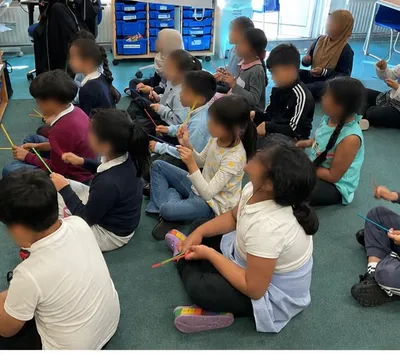
- Explore and play a variety of percussion instruments.
- Create, improvise, and compose simple pieces of music.
- Perform with increasing confidence, control, and expression.
- Develop cooperative skills through group performances and musical activities.
- Build concentration, memory, and listening skills through musical experiences.
- Use music as a means of expressing feelings, ideas, and emotions.
- Experience regular opportunities to perform for audiences within school and the wider community.
- Develop confidence, resilience, and creativity through active participation in music-making.
Music is taught in line with the National Curriculum for Key Stage 1 and is carefully planned to ensure progression in musical knowledge, skills, and vocabulary across the school. Teaching is practical, engaging, and inclusive, allowing all children to develop confidence and enjoyment in music.
Our curriculum is based around the key areas of:
- Singing
- Listening and appraising
- Performing
- Composing and improvising
- Exploring musical elements such as pulse, rhythm, pitch, tempo, dynamics, and timbre
Music is taught through a range of cross-curricular topics and meaningful learning experiences, enabling children to make connections across the curriculum and understand the role of music in different cultures and communities.
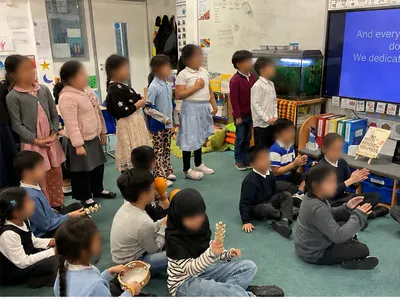
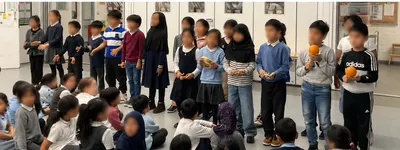
Children take part in weekly singing assemblies led by the Music lead and regular performances throughout the year, including seasonal celebrations, assemblies, and community events at Silk Court. These opportunities help children develop confidence, cooperation, and pride in their achievements.
In the Early Years Foundation Stage, music is taught through play-based, practical, and engaging experiences that support the objectives of the Early Years Foundation Stage Framework, particularly within:
- Expressive Arts and Design
- Communication and Language
- Personal, Social and Emotional Development
- Physical Development
Music is embedded throughout daily routines, continuous provision, and adult-led activities. Children are encouraged to explore sounds, movement, rhythm, and song in a safe and stimulating environment.
In EYFS, children have opportunities to:
- Sing nursery rhymes, action songs, and familiar songs daily.
- Explore and experiment with sounds using voices, body percussion, and instruments.
- Move rhythmically and expressively to music.
- Listen and respond to a variety of musical styles and cultural traditions.
- Develop listening, attention, and turn-taking skills through musical games.
- Explore pulse and rhythm through clapping, chanting, and movement activities.
- Create their own music and sound patterns through imaginative play.
- Build confidence through group singing and performances.